BIGZ - Between the Barrier and the Old Lift
How does a building sound today when it has moved from industrial production to cultural occupation and, finally, to real-estate valorisation?
I first came to BIGZ because of its architecture and the historical layers contained within the building: a former major printing house, later a space occupied by an important cultural community, and finally a private office complex. These stages are not merely a succession of uses. Each one reflects a different way of understanding the city, labour, culture and property.
BIGZ can be read as a sonic palimpsest, even though most of its industrial and cultural sounds are no longer there. My research begins with what remains, and with the sounds I was able to record during three visits, under specific conditions of access, movement and listening.
(binaural render - listen with headphones)
Four Lives of a Building
BIGZ was built to house the State Printing House. Its architecture responded to large-scale industrial activity: machinery, paper, lifts, storage areas and thousands of people organised around editorial production.
The sound of the printing house was the acoustic expression of a productive infrastructure and of a cultural and political project. Books and images circulated from there throughout Yugoslavia: not only objects, but also knowledge, memory and identity.
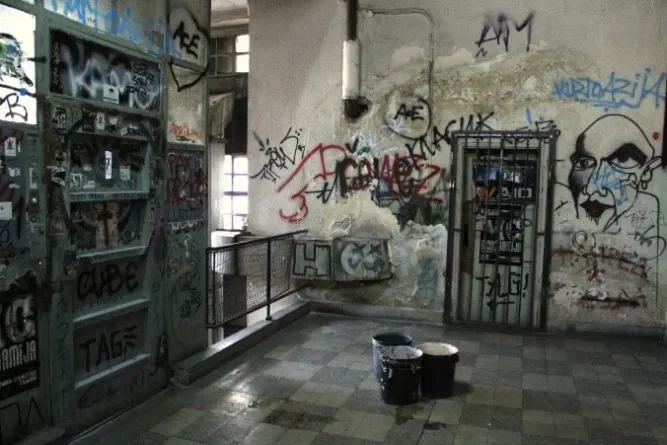
After the dissolution of Yugoslavia, the economic crisis and the decline of industry led to much of BIGZ losing its original function. Abandonment physically weakened the building, but it also opened a space of indeterminacy. For years, musicians, artists, radio stations and cultural collectives have transformed its rooms into rehearsal spaces, studios, clubs and meeting places.
This stage is not a simple interval between abandonment and renovation. It was a concrete form of cultural production and collective appropriation. Those who worked there returned the building to the city at a time when it was still not attractive to the market. They produced music scenes, memory and symbolic value that cannot be measured only in terms of economic profit.
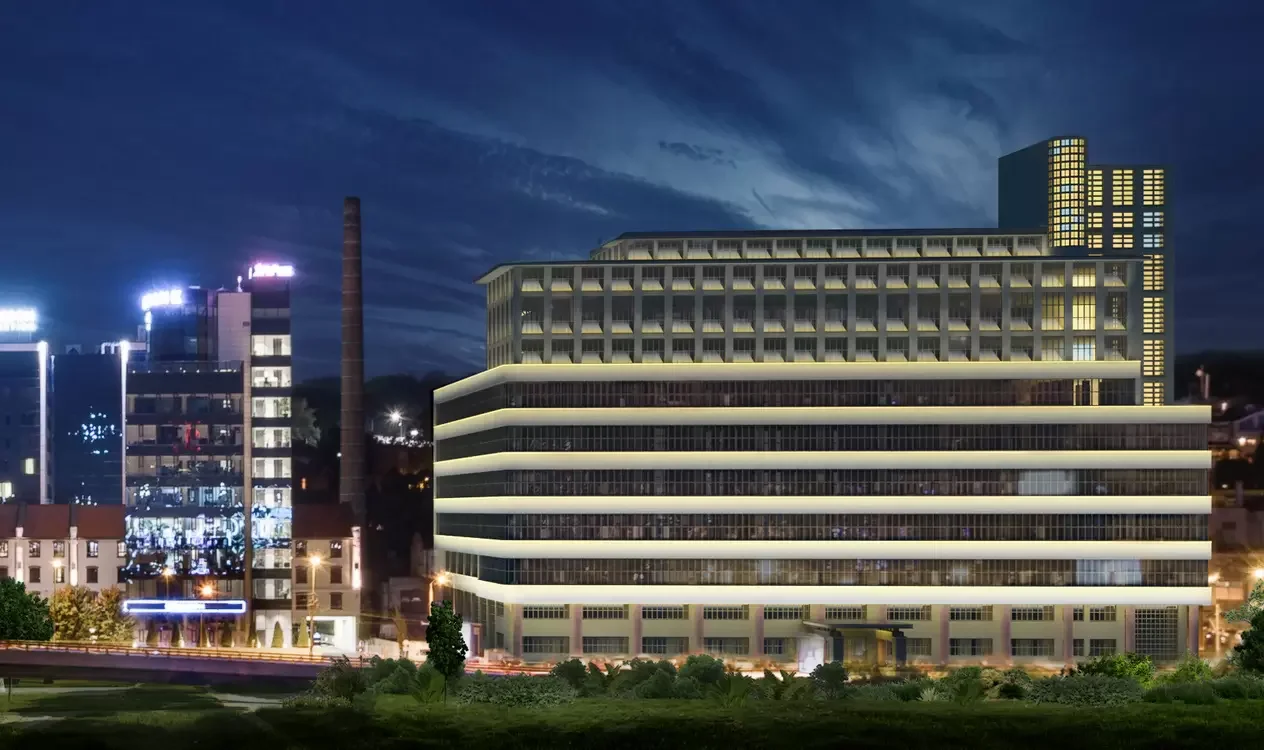
When that value became exploitable again, the building was acquired and transformed by private investors. Its facilities were renovated, and the former rooms were divided into office spaces. Those who had produced the cultural life of BIGZ did not take part in the decisions about its future.
I do not consider this process to have rescued the building. Its structure was rehabilitated in order to reincorporate it into a circuit of real-estate valorisation. The community, informal uses, tolerance towards noise and collective forms of appropriation were considered expendable.
The Barrier.
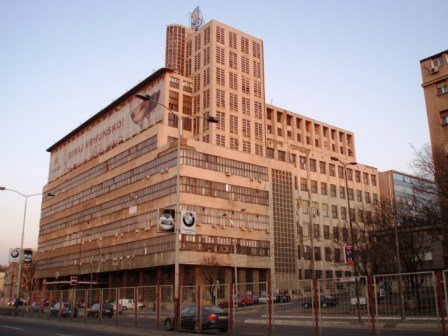
I visited BIGZ three times. The first visit was exterior: I needed to recognise the site, observe its entrances and listen to its relationship with the surrounding environment. The building stands opposite the Belgrade Fair, next to major traffic corridors and near an area undergoing accelerated urban transformation.
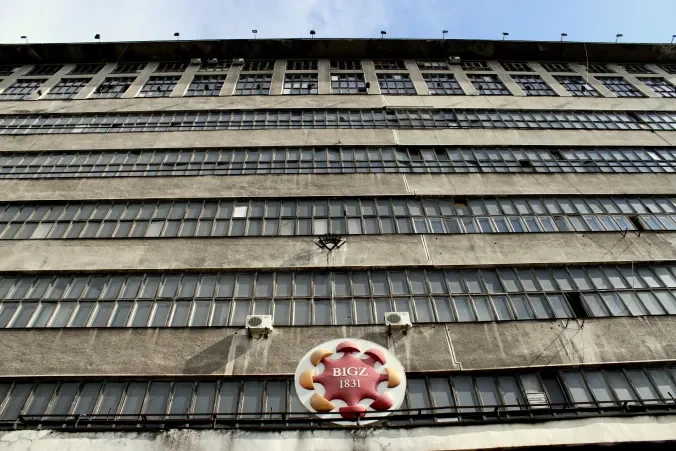
From the outside, BIGZ still maintains the scale and presence of a collective infrastructure. It belongs to the visible history of Belgrade. But that public presence ends at the entrance.
During my second visit, I entered during office hours. I walked towards the reception with the confidence of someone who knows exactly where they are going. The person at the desk interpreted my presence as legitimate and opened the barrier separating the lobby from the lifts and staircases. That barrier became, for me, the clearest image of contemporary BIGZ. It is not only a security mechanism. It is the point where the building classifies bodies: who seems to belong, and who must explain why they are there. An architecture that once hosted informal appropriations is now organised by contracts, surveillance and schedules.
For that visit, I used binaural microphones placed in my ears. Their appearance, similar to headphones, allowed me to walk without setting up tripods or deploying a visible recording system. I recorded the building in motion: corridors, stairs, lifts, doors, voices and shifting perspectives. The recording does not represent the interior from a neutral position. It is the listening of a body moving cautiously while trying to appear part of the building’s normal operation. To listen to BIGZ, I had to adapt to its access codes. The barrier does not simply protect a renovated architecture: it protects a private asset.
The Old Lift.
The third visit took place on a Friday night. From the previous visit, I knew that the restaurant on the top floor remained open outside office hours, and that from the sixth floor it was possible to access a wing still under construction.
I crossed the lobby again, walking with determination. This time, the barrier opened without the need to make eye contact with reception.
On the sixth floor, I found almost finished offices: carpets, panels, suspended ceilings, artificial lighting and surfaces designed to absorb, subdivide and control. They could belong to BIGZ or to countless corporate buildings in any other city. The former industrial scale had been transformed into an interchangeable architecture, predictable and functional to contemporary labour.
There, I was able to make more focused recordings. I also used contact microphones to record the vibrations of the structure of an old lift. The lift no longer works, but its interior still reveals vibrations, vibrations that do not reproduce the old printing machines, nor does it prove how the industrial life of the building once sounded. It is a material persistence: something out of service that still retains acoustic activity beneath the new interiors.
I had so much time that i could also shoot some photos of the old machine room, located on the last floor and whose exact date and function I still need to verify. Its infrastructure contrasts with the newly finished offices: the images show a materiality that the corporate present leaves behind; the recording reveals that this matter is not completely still.
The barrier and the old lift represent two different temporalities. The barrier manages who has access to the present of BIGZ. The lift keeps in vibration a material that this present does not fully control.
During the same visit, I opened a window on the sixth floor and recorded the nocturnal soundscape. Traffic and distant activity entered again into a space designed to exclude them.
From that window, BIGZ no longer appeared to me as an isolated case. Although it is not directly part of the Belgrade Waterfront (the ‘Dubai-style’ property development, valued at billions of euros and covering an area of 177 hectares, driven by the Serbian Government through a ‘lex specialis’ {special law} that circumvented standard urban planning procedures, architectural competitions and public oversight), it forms part of the same political landscape: former industrial, cultural and public spaces are being reinterpreted as property development opportunities, whilst decision-making is concentrated in the hands of political authorities and investors.
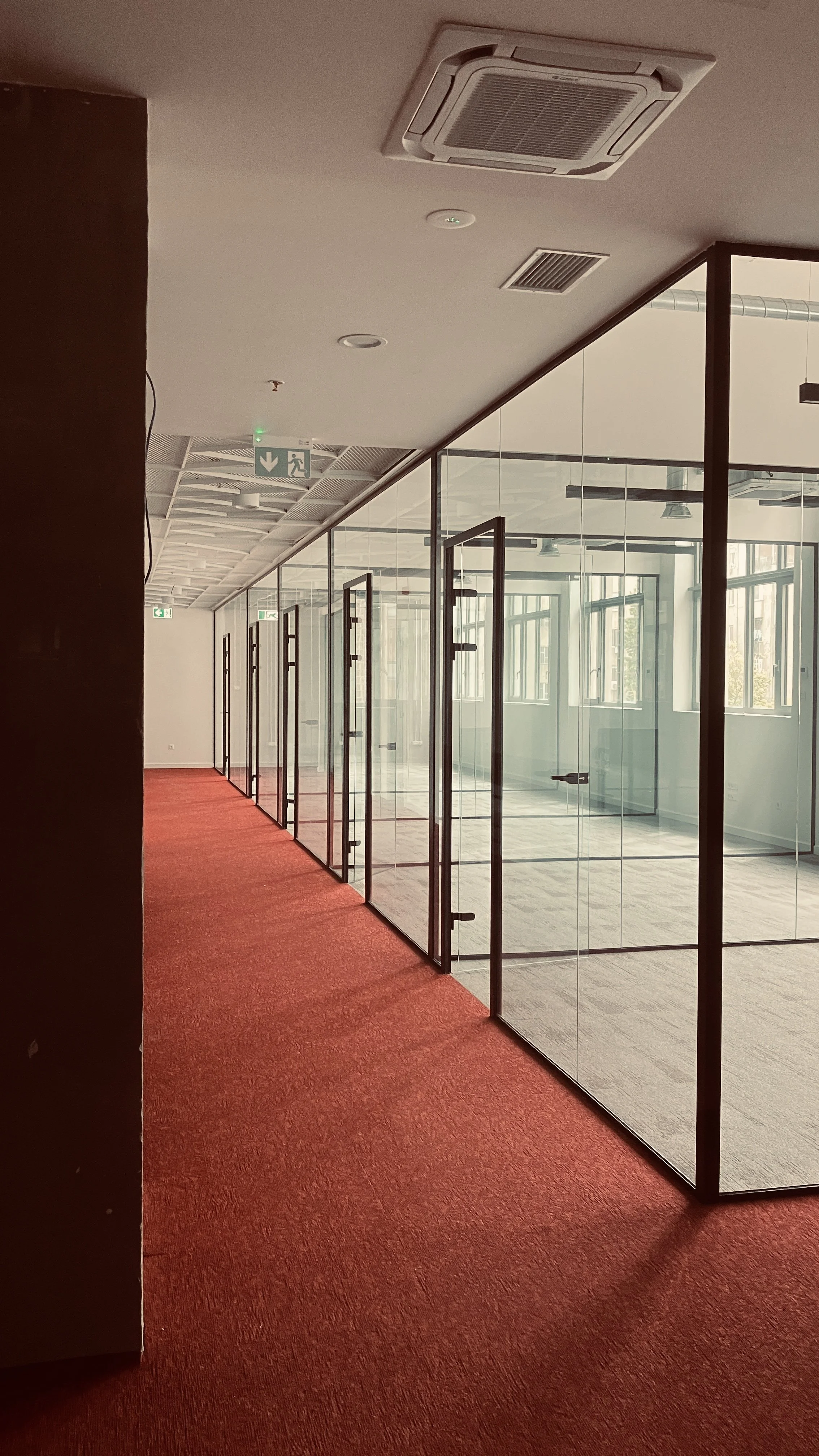
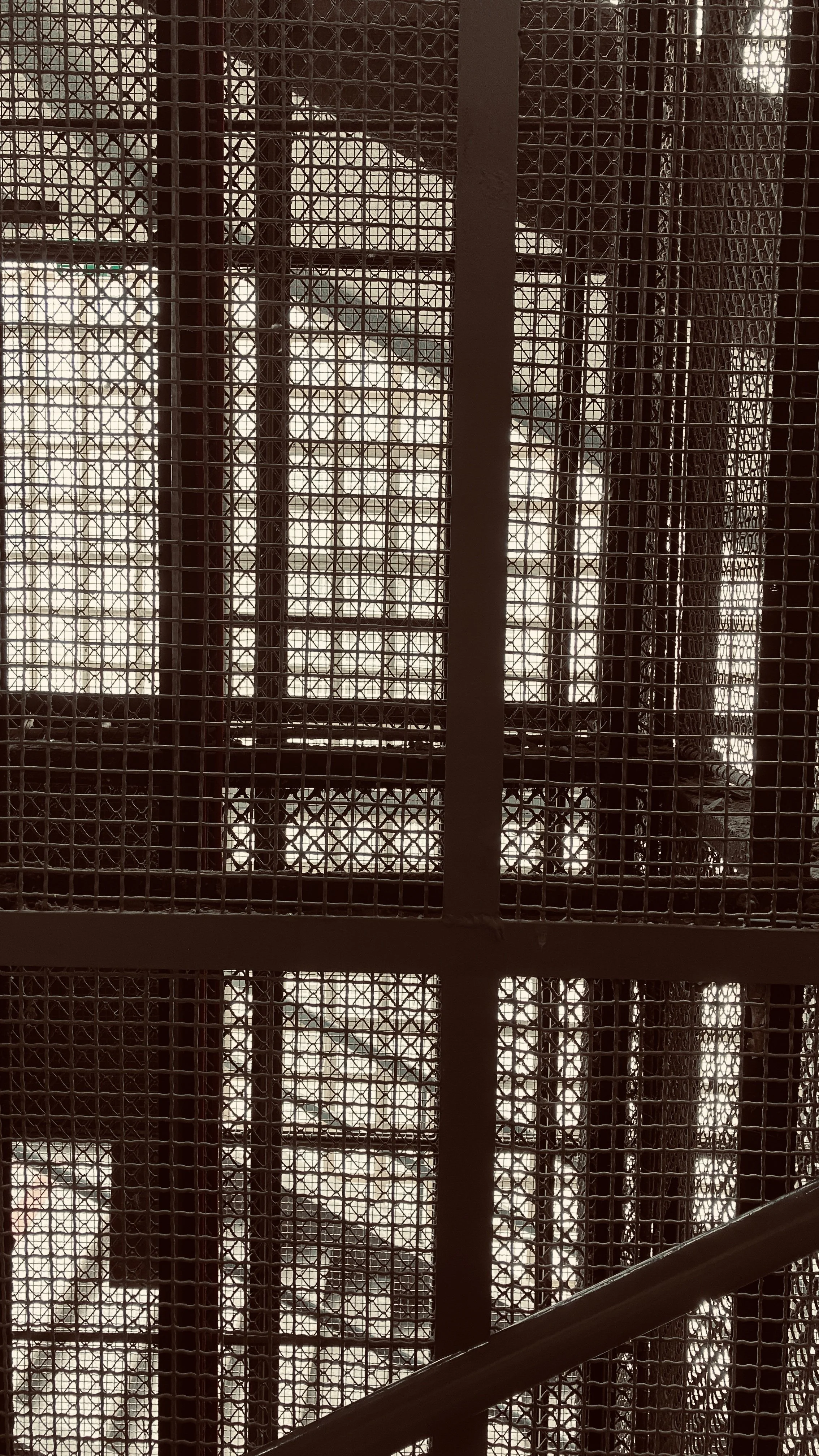
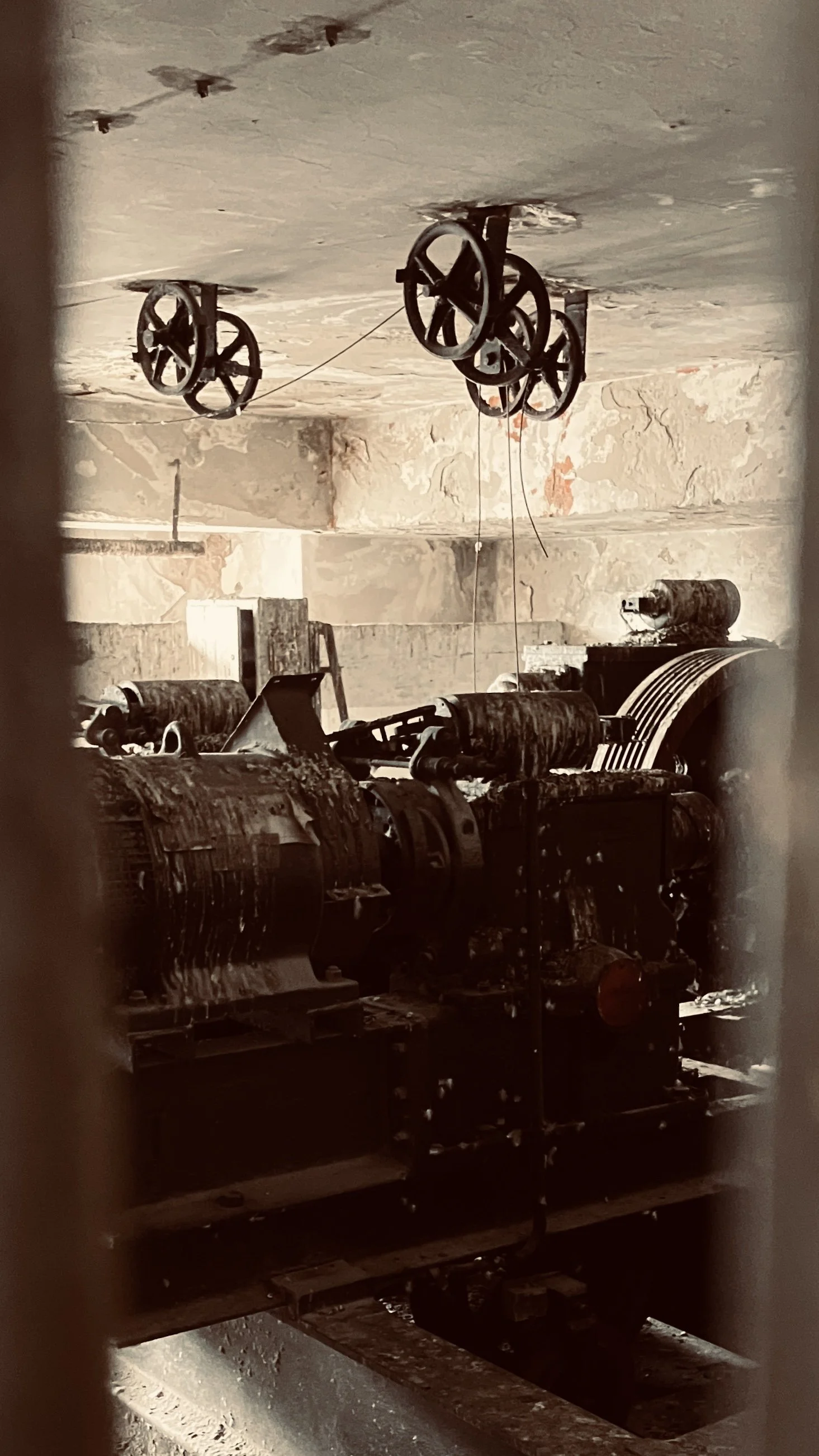
This composition is based on exterior recordings, a binaural walk through the building, corridors, lifts, unfinished offices, structural vibrations and the nocturnal soundscape.
What Can No Longer Be Heard.
This composition does not contain the printing house in operation, nor its workers, nor the rehearsals and conversations of those who culturally occupied BIGZ for years. The idea is not to replace these absences with sound libraries or reconstructions. On the opposite, it works exclusively with the exterior recordings, the binaural walk, the corridors, the lifts, the unfinished offices, the structural vibrations and the nocturnal soundscape.
These sounds do not contain the history of the building by themselves. They acquire meaning in relation to its previous uses, the displaced communities and the current conditions of access. What can no longer be heard is not a purely poetic void, but the consequence of a concrete transformation. The archive documents that moment: some layers have been erased, while others remain as residues, vibrations or absences.
Listening to Valorisation.
The transformation of BIGZ is often presented through words such as recovery, modernisation, investment and progress. The narrative is familiar: an industrial building falls into decline and is finally rehabilitated through private capital. But BIGZ did not move directly from abandonment to renovation. For years, musicians, artists and cultural agents found there something the formal city did not offer them: space, freedom, affordable rents and tolerance towards sonic practices that would have been difficult to develop elsewhere. These were the people who reactivated the building when it was not yet an attractive opportunity for the market. They did not finance a full renovation, but they produced culture, community, identity, memory and public recognition. That value did not give them any power over the future of BIGZ.
When the building became economically interesting again, decisions were made by owners, investors and authorities. The symbolic value collectively produced could be absorbed into the new image of the building, while those who had generated it were left outside.
Valorisation does not only mean increasing the price of a property. It means imposing a new definition of what the building is, for whom it exists, and which forms of life are legitimate within it. In BIGZ, this transformation becomes perceptible in the organisation of space. The barrier separates the public character of its urban presence from the private condition of its interior. The new materials produce controlled and acoustically separated spaces. Where rehearsals and informal activities could once take place, offices now appear, organised according to criteria of productivity, privacy and efficiency.
Privatisation does not have a single sound. It manifests itself in the conditions that determine what can sound, who can produce that sound, and under which rules: in the disappearance of certain activities, in the compartmentalisation of spaces, and in the demand that every presence correspond to a recognised function. It is also heard in what remains, without having been fully incorporated into the new image. The vibrations of the old lift are those of an out-of-service infrastructure that continues to be acoustically active beneath the renovated interiors.
My listening to BIGZ is situated between the barrier and the old lift: between an administered present and a residual material that still vibrates. I am not trying here to prove that the offices “sound capitalist”. The sounds acquire meaning in relation to the history of the building, the expulsion of its cultural community and the conditions under which it was possible to record. Listening to valorisation means attending to how an economic operation modifies not only property, but also access, materiality, circulation and the acoustic possibilities of a place.
BIGZ remains standing, but the physical permanence of the building is not enough to speak of conservation. A heritage separated from the communities, practices and memories that gave it meaning can only be reduced to an image useful to the market. The question is not whether BIGZ was restored correctly. The question is who had the right to decide its future, what kind of value was considered important, and what part of its history had to disappear so that the building could become profitable again.